

TOOTH-SUPPORTED CROWN
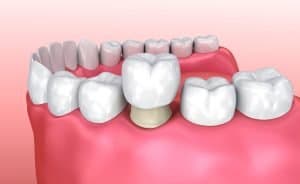
A tooth supported crown is a dental restoration that covers up or caps a tooth. It is cemented into place and cannot be taken out.
FREQUENTLY ASKED QUESTIONS
- 1. What material is in a Tooth Supported Crown?
- Crowns are made of three types of materials:
- Porcelain – most like a natural tooth in color
- Gold Alloy – strongest and most conservative in its preparation
- Porcelain fused to an inner core of gold alloy (Porcelain Fused to Metal or “PFM”) – combines strength and aesthetics
- 2. What are the benefits of having a Tooth Supported Crown?
- Crowns restore a tooth to its natural size, shape and—if using porcelain—color. They improve the strength, function and appearance of a broken down tooth that may otherwise be lost. They may also be designed to decrease the risk of root decay.
- 3. What are the risks of having a Tooth Supported Crown?
- In having a crown, some inherent risks exist both to the tooth and to the crown itself. The risks to the tooth are:
- Preparation for a crown weakens tooth structure and permanently alters the tooth underneath the crown
- Preparing for and placing a crown can irritate the tooth and cause “postoperative” sensitivity, which may last up to 3 months
- The tooth underneath the crown may need a root canal treatment about 6% of the time during the lifetime of the tooth
- If the cement seal at the edge of the crown is lost, decay may form at the juncture of the crown and tooth
- The risks to the crown are:
- Porcelain may chip and metal may wear over time
- If a tooth needs a root canal treatment after the crown is permanently cemented, the procedure may fracture the crown and the crown may need to be replaced
- 4. What are the alternatives to Tooth Supported Crowns?
- Alternatives to crowns are fillings, such as composite or silver amalgam. These restorations remove decay and may restore teeth to their original form, but are limited because they do not improve the strength of broken down teeth. They also do not decrease the risk of root decay or improve the long term function and aesthetics of broken down teeth or crowns.
- 5. How can an existing bite affect a Tooth Supported Crown?
- Excessive bite forces may lead to the tooth under the crown breaking or loosening
- Excessive bite forces may lead to the crown chipping, breaking or loosening
- 6. Are there any post-treatment limitations once I have a Tooth Supported Crown?
- Porcelain on a crown may have a good color match with adjacent natural teeth when the crown is placed, but less of a match as your natural teeth age
- Gum recession may lead to unsightly dark roots or crown margins becoming visible
- A crown may chip or break if used for abnormal activities (e.g., biting fishing line, sewing thread or finger nails, opening bottles)
I have been given the opportunity to ask any questions regarding the nature and purpose of bridges and have received answers to my satisfaction. I voluntarily accept any and all risks, including those listed above and including the risk of substantial harm, if any, which may be associated with any phase of this treatment, in hopes of obtaining the desired results, which may or may not be achieved. By signing this document, I am freely giving my consent to allow and authorize Dr. Cohen and his associates to render any treatment necessary and/or advisable to my dental conditions, including the prescribing and administering of any medications and/or anesthetics deemed necessary to my treatment.